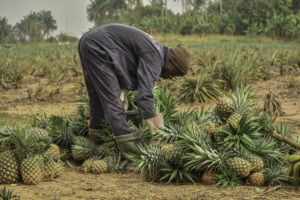
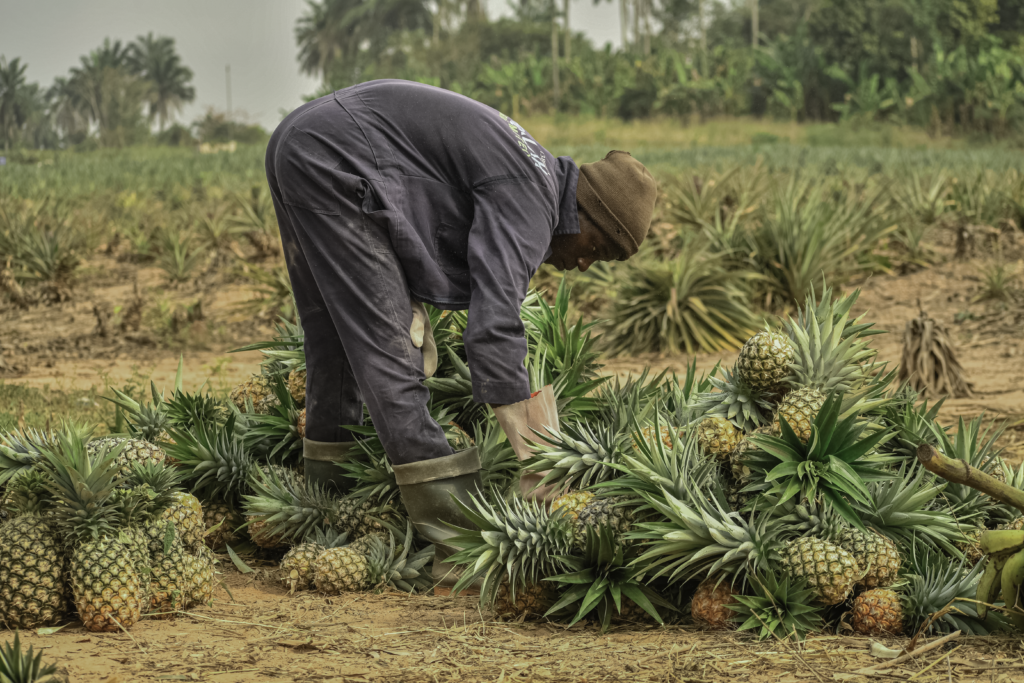
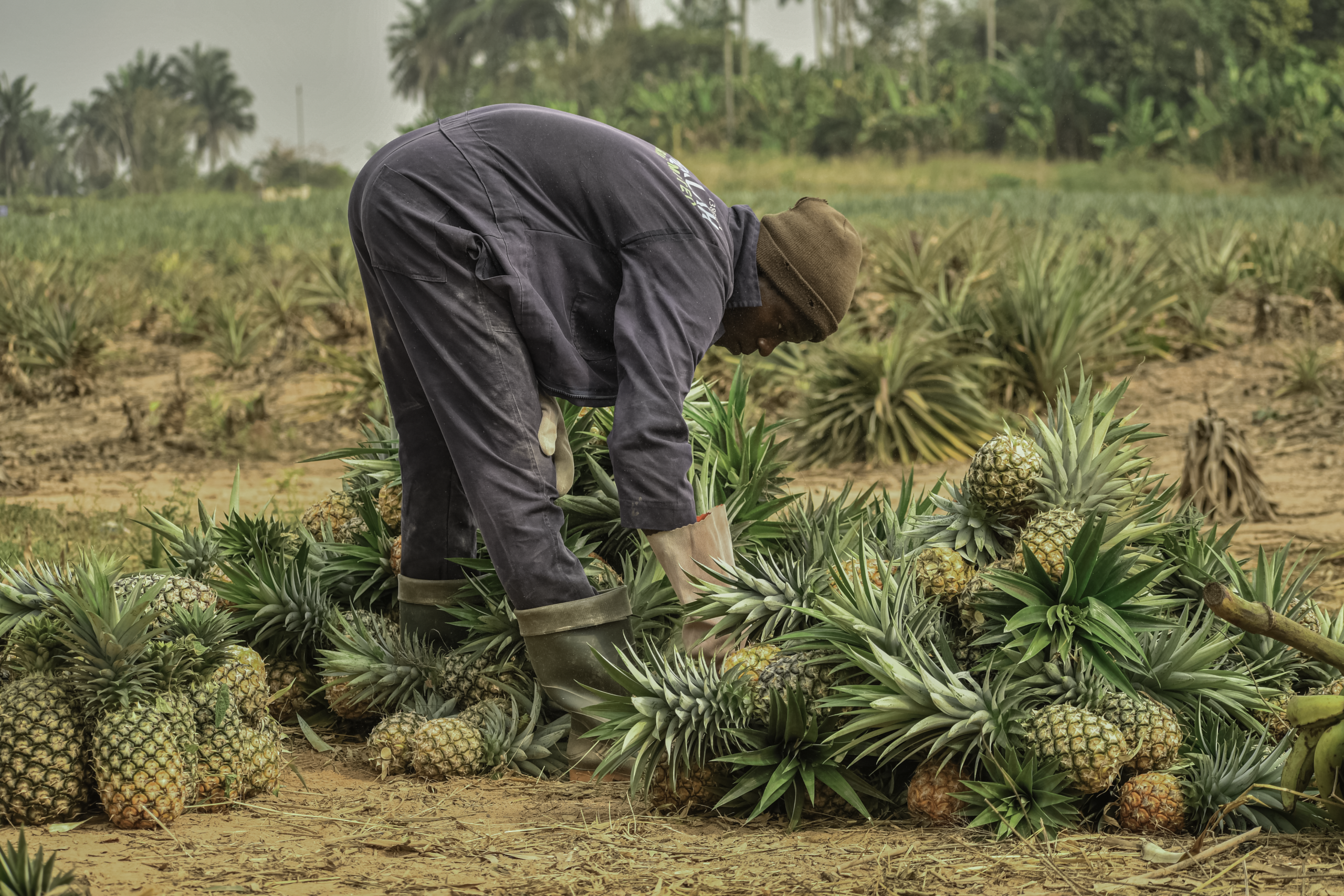
Early one morning on a farm, an African farmer walked through his pineapple field. He stopped beside one particular pineapple, looked at it carefully and smiled. “Ah, you’re ready.” And just like that, Mr. Pineapple’s journey began.
For months, Mr. Pineapple had been growing quietly on the farm. He had enjoyed the rain, the sunshine and the farmer’s careful attention. Now, he was finally mature enough to leave the farm. But leaving the farm was only the beginning.
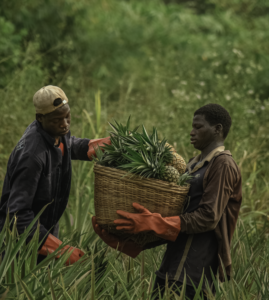
The farmer carefully harvested him and took him along with the other pineapples for sorting and grading. Some were mature and ready for the market. Some were still immature and had to be left behind because they might not develop properly or have the sweetness and appearance buyers wanted. Some had visible damage and had to be separated.
Mr. Pineapple was lucky. He was healthy, mature and ready for the next stage. But then the farmer remembered something very important: a good pineapple can still lose its value after harvest if it is not handled properly. Too much heat, rough handling, bruising, poor packaging or unnecessary delays could reduce his value before he even got to the customer.
This is one of the reasons agricultural support matters. Through its agricultural activities, Davidorlah promotes better production, harvesting, handling and market-focused practices. Because growing a good pineapple is one thing. Making sure that pineapple keeps its value after harvest is another.
Soon, Mr. Pineapple was loaded onto a vehicle. His next destination could be an aggregator, trader, processor, wholesaler, retailer or another buyer. And that was when the road trip began.
Now, if you know anything about moving produce in Nigeria, you already know that this part of the journey comes with its own challenges. Poor roads, too much stacking, rough handling, heat, delays and poor packaging can all affect the quality of the fruit.
Mr. Pineapple needed to be protected. Good ventilation was important because too much heat and moisture could make him deteriorate faster. Excess moisture could also encourage mould and spoilage. Every bruise had a cost, and every delay could affect his value.
The journey continued, and eventually, Mr. Pineapple arrived at a processing facility. This was where things got interesting.
He could have simply been sold fresh, but there were other possibilities. He could be washed, peeled, sliced and packaged as ready-to-eat fruit. He could become juice, dried pineapple or jam. Or, in his case, he could be processed into pineapple concentrate for sale to different manufacturing companies.
Suddenly, Mr. Pineapple was no longer just some fruit. He had become part of something much bigger. His journey was creating opportunities for processing, logistics, packaging, employment and income.
And this is what makes agriculture so powerful. The value of a crop does not end when it leaves the farm. In fact, that may be where another chapter of its story begins.
Eventually, Mr. Pineapple could find his way to a supermarket, market, restaurant, roadside seller or another retail outlet. And somewhere, a customer would pick him up.
The customer might look at his size, check his colour, look at how fresh he is, check the price and then decide, “I’ll take this one.”
To the customer, it may just be a simple purchase. But behind that one pineapple is a long chain of people. There is the farmer who grew him, the field worker who supported better farming practices, the aggregator who collected him, the transporter who moved him, the processor who added value and the retailer who brought him closer to the customer.
So, the next time you see a pineapple sitting quietly in a market, don’t just see a pineapple. Think about the journey.
Think about the farmer who planted it. Think about the months it spent growing. Think about the hands that harvested it. Think about the roads it travelled. Think about the people who handled it and the businesses that helped move it from one stage to another.
Because agriculture is not just about what happens on the farm. It is about everything that happens after the farm too.
From better farming and harvesting to transportation, processing, packaging, market access and consumption, every part of the journey matters. When we strengthen that journey, we reduce losses, create more value, create jobs and build stronger agricultural businesses.
And that is what Davidorlah is working towards.
We believe that when a crop leaves the farm, the story is not over. It is simply the beginning of another chapter.
Because from farm to fork, every pineapple has a story.
And at Davidorlah, we are committed to helping make that story a better one.
Davidorlah Nigeria Limited, Prosperity For All.